
Hepatocellular Carcinoma
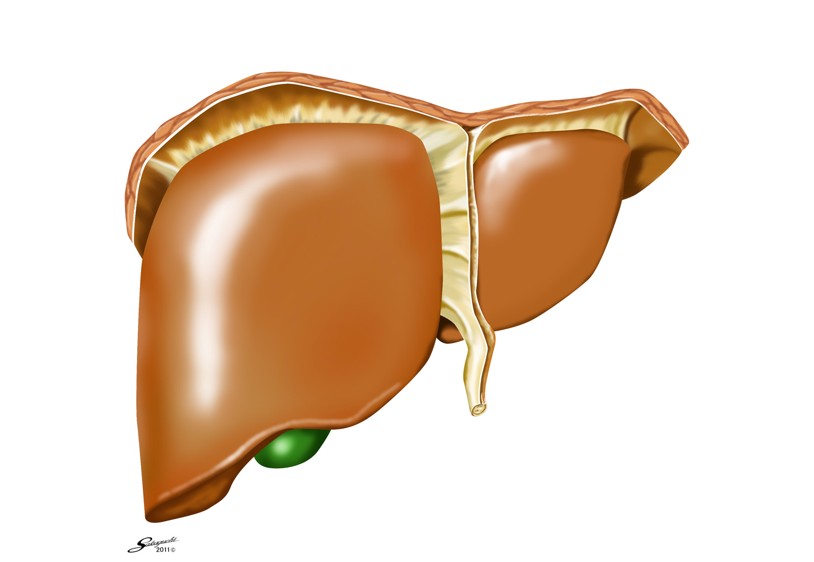
Hepatocellular carcinoma is the most common primary liver cancer that occurs in the liver. In the past, many cases were associated with hepatitis B or C, but in recent years, cases associated with fatty liver and diabetes have been increasing. Since there are often few subjective symptoms in the early stages, early detection through regular imaging and blood tests is important.
Features of Our Department
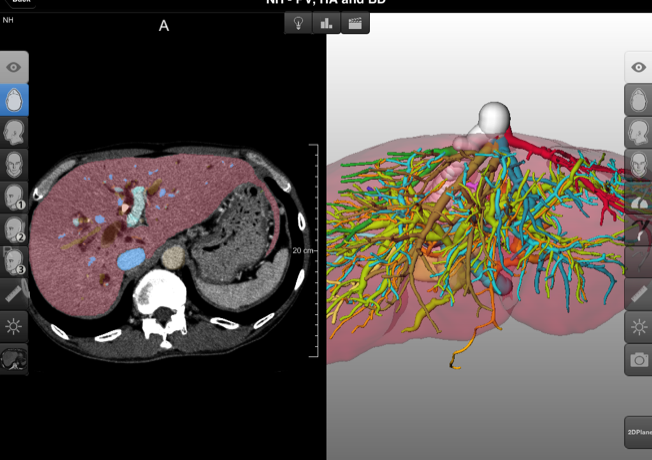
Our department actively introduces laparoscopic liver resection to reduce the physical burden on patients. We are also planning to introduce robot-assisted liver resection, aiming for further minimally invasive procedures and improved surgical accuracy. We will propose surgical procedures to reduce the risk of postoperative complications by understanding patient-specific vascular anatomy and tumor location using preoperative 3DCT images.
For advanced hepatocellular carcinoma, we determine treatment policies based on the Clinical Practice Guidelines for Hepatocellular Carcinoma and the resectability classification by the joint project of the Japanese Society of Hepato-Biliary-Pancreatic Surgery and the Japanese Society of Liver Cancer. We also actively engage in multidisciplinary treatment combined with preoperative therapy and consider treatment possibilities for cases deemed difficult to resect by other institutions.
Furthermore, for cases with impaired liver function or complicated with decompensated liver cirrhosis, we carefully consider treatment options, including living donor liver transplantation. Our department has been performing living donor liver transplantation since 1997, providing advanced transplant medicine in collaboration with multiple disciplines.
Treatment Results
Our department has been involved in the treatment of hepatocellular carcinoma for many years and has performed a large number of liver resections.
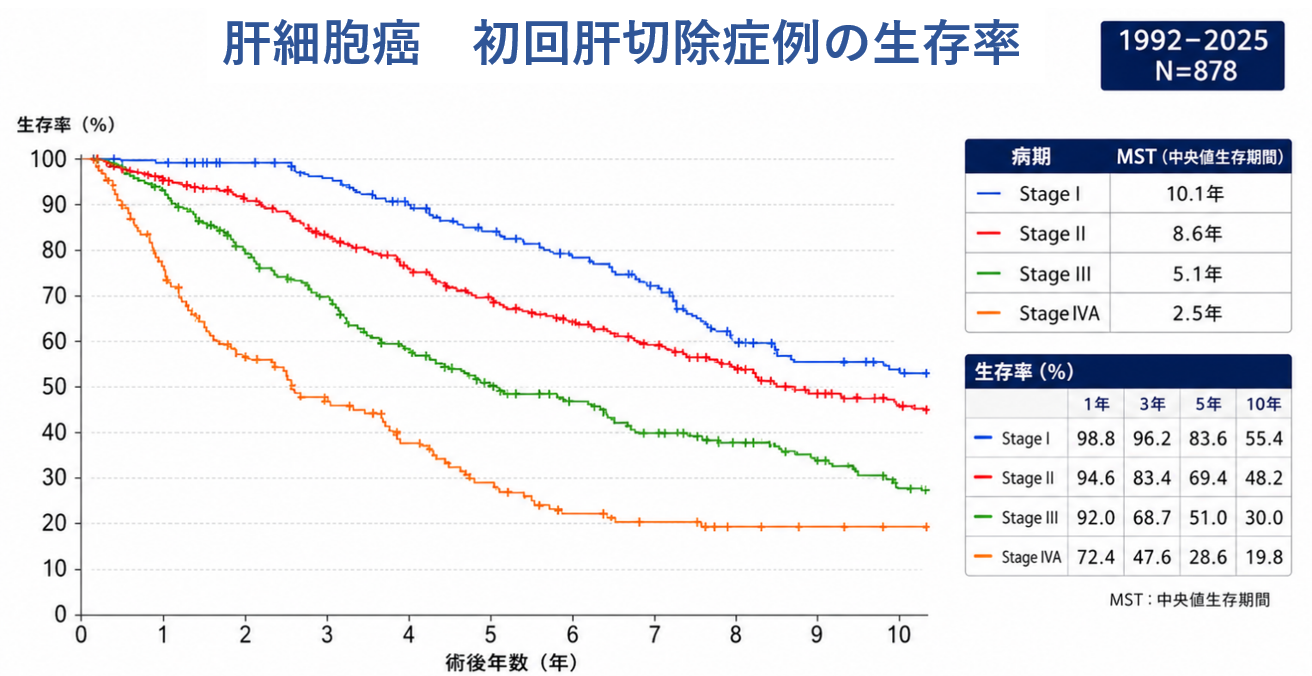
In 2025, there were 31 cases of hepatocellular carcinoma resection, with approximately 70% of cases undergoing minimally invasive surgery, including laparoscopic surgery. Furthermore, in a study of 878 initial liver resections from 1992 to 2025, the 5-year survival rate for Stage I cases was 83.6%, maintaining favorable treatment outcomes.
Treatment Outcomes
Our Department's Initiatives
- Preoperative assessment of split liver function using asialo SPECT/MDCT fusion imaging
- Expansion of resection indications utilizing portal vein embolization
- Early prediction and intervention protocol for postoperative liver failure
- Multidisciplinary treatment including drug therapy such as lenvatinib and sorafenib for recurrent cases